
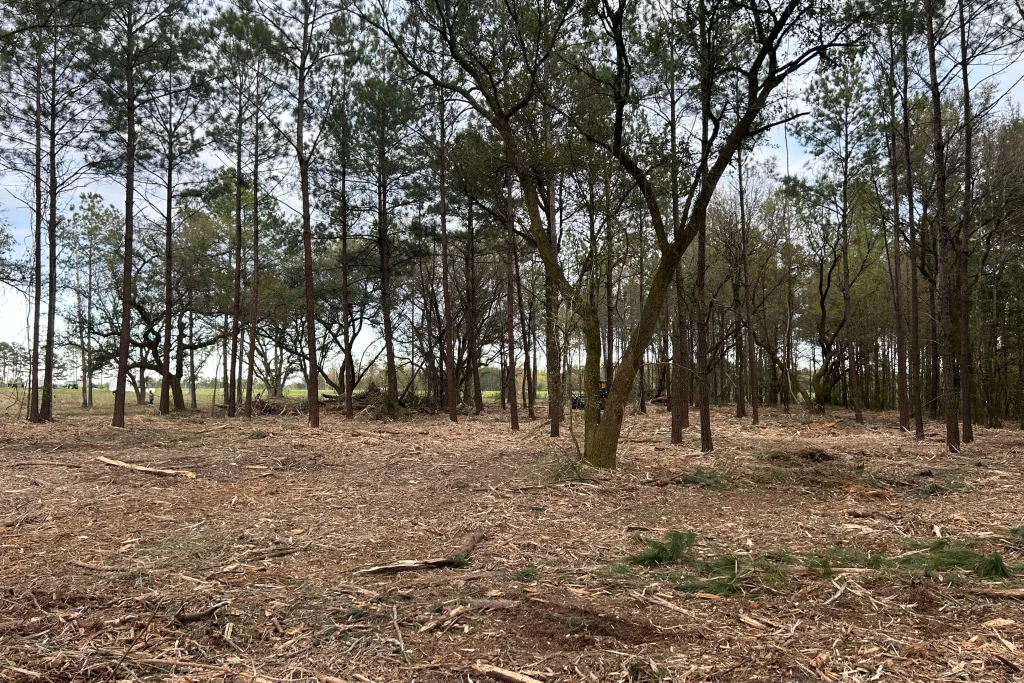
So the crew has come and gone, and your property looks completely different than it did yesterday. The brush is gone, the overgrowth is cleared, and you’re looking at open land for the first time in years. Now what?
The good news is that forestry mulching doesn’t just clear your land — it sets it up for whatever comes next. Here’s a practical guide to what you can do with your property after a forestry mulching job, and how to keep it looking great long term.
What's Left Behind After Forestry Mulching?
When the job is done, what’s left on the ground is a natural layer of wood chip mulch — the processed remains of everything that was cleared. This isn’t waste. It’s actually one of the biggest benefits of the mulching process.
That mulch layer does several important things:
- Returns nutrients directly to the soil as it decomposes
- Retains moisture in the ground, which is especially valuable during Alabama’s hot summer months
- Protects the topsoil from erosion and runoff
- Suppresses weed growth in the short term, slowing down unwanted resprouting
- Creates ideal conditions for new planting or natural regrowth
Think of it less as debris and more as a head start for whatever you want to do with the land next.
Option 1 — Let It Decompose Naturally
The simplest option is to do nothing and let the mulch layer break down on its own. Over time — typically one to two seasons depending on the thickness of the layer — the mulch will decompose back into the ground and enrich the soil naturally.
This is a great approach if you’re not in a hurry to do anything specific with the land and just wanted it cleared and opened up. The decomposing mulch will continue to improve your soil health long after the machine has left.
Once you start to see new growth reaching about a foot above the ground, give us a call. We’ll come back out and bush hog the area at a reasonable rate to knock it back down. Depending on how thick the mulch layer is, it typically takes one to two bush hogging sessions before the ground can be maintained with a regular lawnmower or small bush hog.
Option 2 — Replant Trees or Native Vegetation
If your goal is to improve your forest or establish new plantings, forestry mulching gives you an excellent foundation to work with. The mulch layer retains moisture in the soil — critical for getting new trees and plants established — and the cleared canopy allows sunlight to reach the ground, giving seedlings the light they need to take hold.
This is also a great opportunity to replace invasive species with native Alabama vegetation. Once the invasive growth has been cleared and mulched, native plants have a real fighting chance to re-establish without being choked out.
Good options for replanting in southwest Alabama:
- Longleaf pine
- Slash pine
- Native hardwoods — white oak, water oak, and sweetgum
- Native wildflowers and groundcovers for open areas
Talk to your local Alabama Forestry Commission office or a local nursery for specific planting recommendations based on your soil type and land use goals.
Option 3 — Establish Pasture or Food Plots
Forestry mulching is a popular first step for landowners looking to convert wooded acreage into pasture land, hay fields, or hunting food plots. The cleared ground and decomposing mulch layer create good conditions for establishing grass seed, clover, or other plantings.
You’ll want to allow some decomposition time before seeding depending on the thickness of the mulch layer, and you may need to do a light tilling or disking pass to work the mulch into the soil before planting. A local agricultural extension office can advise on the best seed varieties and timing for your area.
Option 4 — Prepare for Construction or Development
If you cleared the land as a first step toward building, forestry mulching has given you a clean, low-disturbance starting point. Depending on your project, your contractor may need to do additional site work — grading, stump grinding, or soil compaction testing — before breaking ground.
Keep in mind that forestry mulching leaves the mulch layer in place rather than scraping to bare dirt. If your project requires bare dirt as a finished condition, let us know upfront and we can discuss whether a dozer pass makes sense for your site.
The Most Important Thing — Stay Ahead of Regrowth
No matter what you plan to do with your land after mulching, the one thing every landowner should know is this: vegetation will come back. That’s not a failure of the mulching process — it’s just nature doing what it does.
The key is staying ahead of it. Forestry mulching is the first and most important step in managing an overgrown property, but it works best as part of an ongoing maintenance plan. Here’s a simple timeline to follow:
- Immediately after mulching — enjoy your cleared property and let the mulch begin to decompose
- 3–6 months later — monitor for new growth and resprouting seedlings
- When growth hits about 1 foot — call us for a bush hogging pass to knock it back
- After 1–2 bush hogging sessions — the ground is typically manageable with a regular lawnmower or small bush hog on your own schedule
Staying on top of regrowth early is much easier and cheaper than letting it get out of hand again. We offer bush hogging as a standalone service and are happy to come back out on a regular maintenance schedule if that works better for you.
Ready to Get Started?
Forestry mulching is the smartest first step any landowner can take toward reclaiming and managing their property. Whether you’re starting fresh, replanting, building, or just wanting to enjoy your land again — we’re here to help from the first pass of the machine to the last bush hogging session.
Give us a call or fill out our quote form and we’ll get back to you fast with a straight answer and a fair price.
Deep South Mulching is a family-owned, fully licensed and insured forestry mulching and land clearing company serving Mobile, Baldwin County, and communities throughout southwest Alabama.